
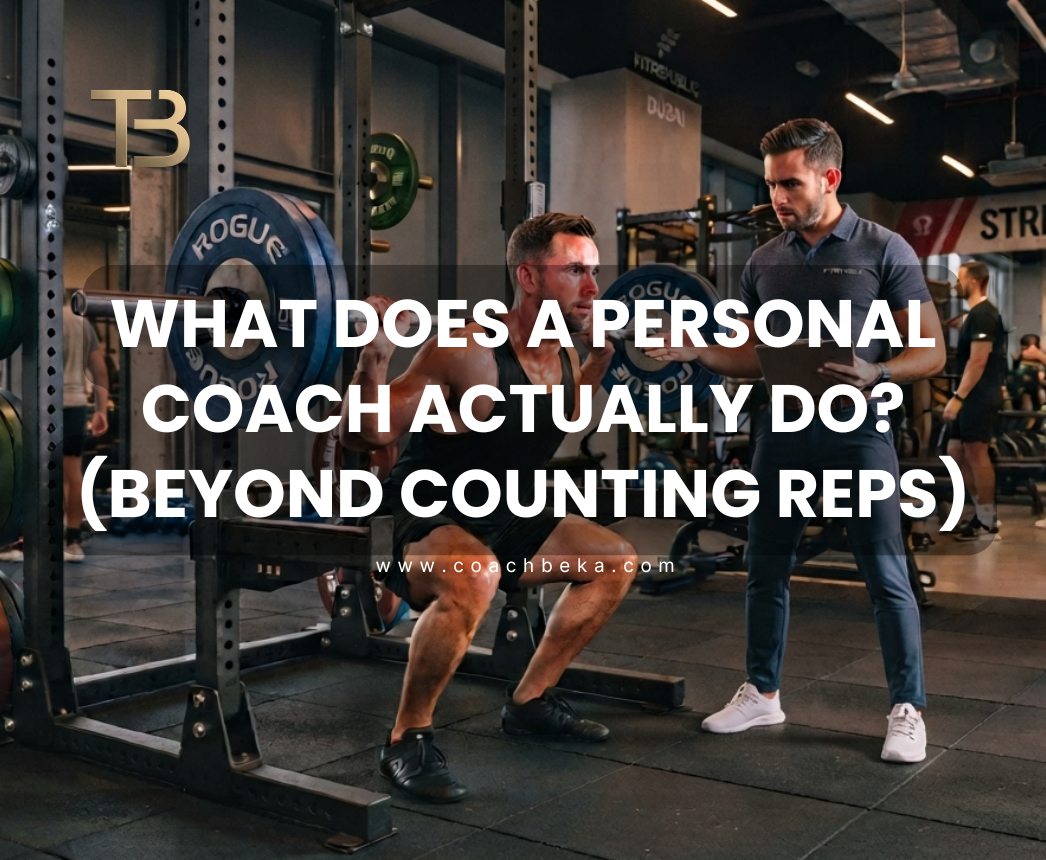
Ask most people what a personal coach does, and you will get the same answer: they count your reps, yell encouragement, and hand you a treadmill schedule. That picture is outdated and, frankly, a little insulting to what the job actually involves.
A good coach functions more like a movement specialist, a data analyst, and an accountability partner rolled into one person. If you are weighing whether the cost is worth it, here is what actually happens behind the scenes, and what tells a real coach apart from someone who just stands next to you while you lift.
It's More Than an Hour in the Gym
A personal coach designs, monitors, and adjusts a training and nutrition program based on your specific body, goals, and lifestyle, while correcting your form and keeping you accountable over time. The workout itself is only one visible part of a much larger process that includes assessment, programming, tracking, and ongoing adjustment.
Here is what that actually looks like in practice.
1. Assessment Before Anything Else
Before writing a single workout, a proper coach looks at:
- Posture and movement screening
- Joint mobility and flexibility checks
- Injury history and current pain points
- Baseline strength and conditioning levels
- Lifestyle factors like sleep, stress, work schedule, and travel
Two people chasing the same goal can need completely different programmes. Someone with tight hips after years at a desk won’t train the same way as an athlete returning from a knee injury. That’s why assessment comes first.
2. Programming Based on Biomechanics, Not Trends
A coach with real training in biomechanics builds your program around how your body actually moves, not around whatever routine is trending on social media. This includes:
- Selecting exercises that match your joint structure and mobility
- Sequencing training to balance intensity and recovery across the week
- Adjusting load, volume, and tempo based on your response to training
- Modifying movements around old injuries or physical limitations
This is the difference between a program that gets copied from a fitness app and one that is engineered specifically for your body.
3. Constant Form Correction
Counting reps is easy. Watching how you move on every single rep, and correcting subtle errors before they become injuries, is a skill that takes years to develop. A good coach is constantly checking:
- Joint alignment during lifts
- Breathing patterns under load
- Compensation patterns (using the wrong muscles to complete a movement)
- Fatigue-related form breakdown late in a set
Small corrections here prevent the shoulder, knee, and lower back injuries that stop people from training consistently. This is also where in-person or video-based coaching outperforms following a written plan alone.
4. Nutrition Guidance Built Around Your Life
Training results are limited without nutrition support. A coach with proper nutrition coaching credentials does more than hand you a meal plan. They typically:
- Calculate your calorie and macronutrient needs based on your goals and activity level
- Adjust your intake as your body composition and metabolism change
- Help you navigate real-life situations like travel, social events, or religious fasting periods
- Teach you the reasoning behind the numbers, not just the numbers themselves
The goal is a system you can sustain, not a restrictive diet you abandon after three weeks.
5. Tracking Progress With Real Data
A good coach measures more than the number on the scale. Depending on your goals, this might include:
- Strength benchmarks (how much you lift, and how that changes over time)
- Body composition (fat loss, muscle gain, measurements)
- Recovery markers (sleep quality, energy levels, soreness)
- Mobility and movement quality over time
This data is what allows a coach to adjust your program intelligently instead of guessing. If progress stalls, the data tells them whether the issue is training volume, recovery, nutrition, or something else entirely.
6. Accountability That Goes Beyond the Gym
One of the most underrated parts of coaching is consistency support. A coach checks in between sessions, follows up on nutrition adherence, and helps you problem-solve when life gets in the way of your plan. This is especially valuable for busy professionals and executives who need a system flexible enough to survive travel, long hours, and unpredictable schedules.
Accountability is not about guilt. It is about having someone who notices when you are drifting off track and helps you course correct before three missed weeks turn into three missed months.
7. Long-Term Strategy, Not Just Short-Term Intensity
A coach who only cares about short-term results will push you hard for a few weeks and burn you out. A coach focused on sustainable results plans in phases, building a foundation, progressing intensity gradually, and adjusting the plan as your life and goals change.
This long-term view is what separates a transformation that lasts from one that reverses the moment your program ends.
What This Means for You as a Client
If you are working with, or considering, a personal coach, here is what you should expect from the relationship:
- A proper assessment before any program is written
- Clear reasoning behind exercise and nutrition choices, not just instructions
- Ongoing form correction during every session
- Regular check-ins on progress and adjustments based on real data
- A plan that fits your actual life, not a generic template
If your current coach is not doing most of these things, you are likely paying for supervision, not coaching.
Frequently Asked Questions
- Is a personal coach the same as a personal trainer? The terms are often used interchangeably, but “personal coach” typically implies a broader relationship that includes nutrition guidance, accountability, and long-term programming, while “personal trainer” can sometimes refer more narrowly to supervising workouts.
- How involved is a personal coach in my nutrition? This depends on their credentials. A coach with nutrition coaching certification will typically calculate your calorie and macronutrient targets, adjust them over time, and help you apply them to real-life situations, rather than handing you a generic meal plan.
- Do I need in-person sessions, or can coaching work online? Both can work. In-person coaching allows real-time form correction, which is valuable for beginners or anyone with injury history. Online coaching can work well for experienced trainees who need programming, accountability, and check-ins more than hands-on correction.
- How do I know if my coach is actually coaching me, or just supervising my workouts? Look for the signs above: a real assessment, clear reasoning behind your program, nutrition guidance, progress tracking, and regular adjustments. If your sessions consist only of someone counting your reps with no explanation or follow-up, that is supervision, not coaching.
Coaching Is More Than Training
A personal coach’s real value is not in the workout itself. It is in the assessment, the programming, the constant small corrections, the nutrition strategy, and the accountability that ties everything together over months, not days. When you understand what coaching actually involves, it becomes much easier to spot the difference between someone who trains you and someone who genuinely coaches you.
If you want a personal coach in Dubai who builds your program around real assessment data, biomechanics, and measurable progress, reach out to Coach Beka to start with a proper consultation.
Copyright 2026 coachbeka.com All rights reserved.