
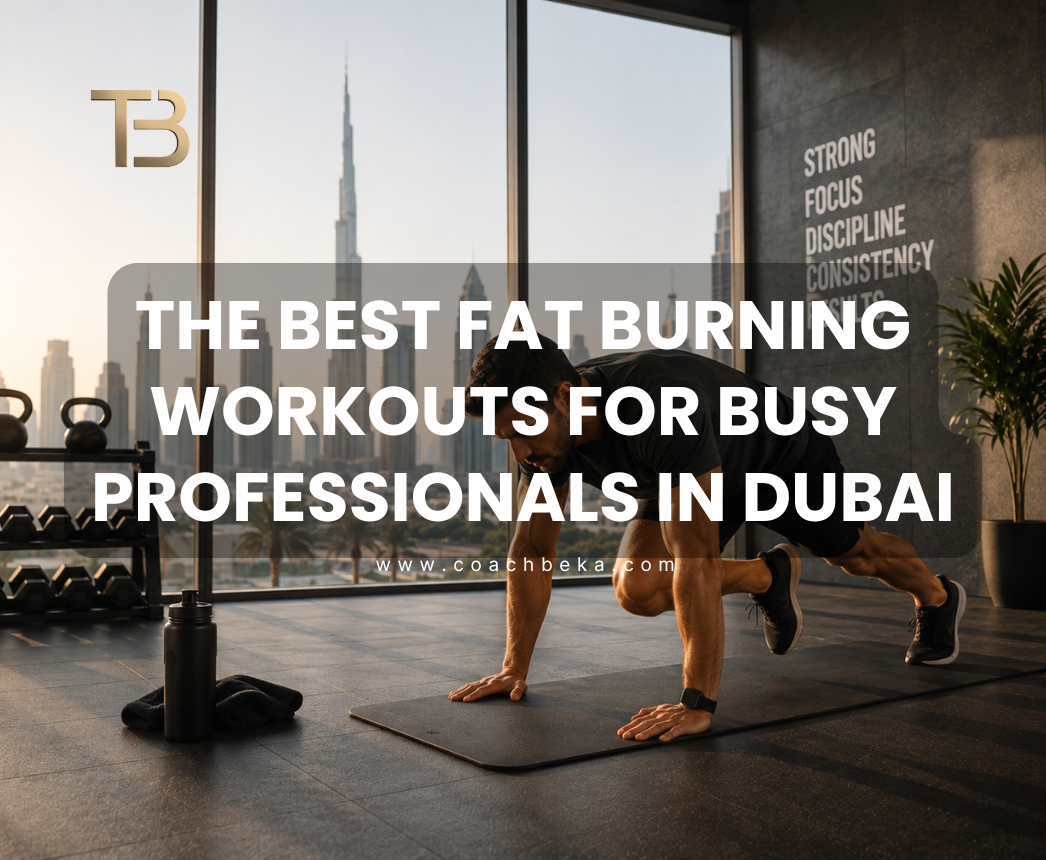
Between back-to-back meetings, international travel, and the general pace of working in Dubai, finding time to train can feel impossible. The good news is that effective fat burning does not require two hours a day in the gym. It requires the right type of training, done consistently, with a strategy behind it.
This guide breaks down the workouts that actually move the needle on fat loss for people with limited time, along with how to structure them around a demanding schedule.
The Short Answer
The most effective fat burning workouts for busy professionals combine resistance training with short bursts of high-intensity cardio, done 3 to 4 times per week in sessions of 30 to 45 minutes. Strength training builds and preserves muscle, which keeps your metabolism working harder even at rest, while high-intensity intervals maximize calorie burn in a short window. The combination outperforms long, low-intensity cardio sessions for people who cannot commit to hours in the gym.
Here is how each piece fits together, and how to build a realistic weekly plan around it.
1. Strength Training: The Foundation, Not an Afterthought
Many people still think cardio is the main tool for fat loss and strength training is optional. This is backwards. Muscle tissue burns more calories at rest than fat tissue does, which means the more lean muscle you carry, the higher your resting metabolic rate.
For busy professionals, full-body strength sessions are the most time-efficient option. Instead of splitting training into separate days for chest, back, and legs, a well-designed full-body session hits major muscle groups in one workout, using compound movements like:
- Squats or leg press variations
- Deadlifts or hip hinge patterns
- Push movements (bench press, overhead press)
- Pull movements (rows, pull-ups or lat pulldowns)
Three full-body strength sessions per week, 40 to 45 minutes each, is enough to build and maintain muscle while supporting fat loss, without requiring daily gym visits.
2. High-Intensity Interval Training (HIIT) for Time Efficiency
HIIT alternates short bursts of near-maximum effort with brief recovery periods. A typical session might involve 20 to 30 seconds of intense effort (sprinting, cycling, kettlebell swings) followed by 30 to 60 seconds of rest, repeated for 15 to 20 minutes total.
The appeal for busy professionals is straightforward: HIIT produces a strong metabolic response in a fraction of the time that steady-state cardio requires. Research consistently shows that short, intense intervals burn a significant amount of calories both during the workout and for hours afterward, an effect often referred to as the afterburn effect.
A realistic approach is one or two HIIT sessions per week, ideally on days separate from your heaviest strength sessions to allow for recovery.
3. Compound Movement Circuits
If your schedule only allows for one type of training, compound movement circuits combine the benefits of strength and cardio in a single session. These involve performing strength exercises back to back with minimal rest, keeping your heart rate elevated while still building muscle.
An example circuit might include:
- Goblet squats
- Push-ups or dumbbell chest press
- Kettlebell swings
- Renegade rows
- Mountain climbers
Performed for 3 to 4 rounds with short rest periods, this style of training fits into a 30-minute window and delivers both strength and conditioning benefits, making it one of the most time-efficient options available.
4. Zone 2 Cardio for Recovery Days
Not every workout needs to be intense. On lighter days, low-to-moderate intensity cardio, often called Zone 2 training, supports fat metabolism, cardiovascular health, and recovery without adding significant fatigue. This can be a brisk walk, an easy cycle, or a light swim for 30 to 45 minutes.
For professionals with high stress levels and inconsistent sleep, which is common with demanding jobs and frequent travel, Zone 2 cardio is a useful tool that supports fat loss without adding to overall training stress.
Sample Weekly Structure for Busy Professionals
A realistic week for someone with limited time might look like this:
- Monday: Full-body strength training (45 minutes)
- Tuesday: HIIT session (20 minutes)
- Wednesday: Rest or light Zone 2 cardio (30 minutes)
- Thursday: Full-body strength training (45 minutes)
- Friday: Compound movement circuit (30 minutes)
- Weekend: One optional Zone 2 session, one full rest day
This structure totals roughly 3 hours of focused training per week, which is realistic even for people with heavy travel schedules or long working hours.
Why Workout Selection Alone Is Not Enough
Even the best workout plan will not produce fat loss without addressing two other factors:
- Nutrition and calorie balance: Fat loss ultimately depends on maintaining a calorie deficit over time. No amount of HIIT will offset a diet that consistently exceeds your energy needs. This is why coaching that includes structured nutrition guidance tends to outperform workout plans alone.
- Recovery and sleep: High stress and poor sleep raise cortisol levels, which can interfere with fat loss and increase cravings. Busy professionals often need as much attention on sleep and stress management as they do on training itself.
Training Around Dubai-Specific Challenges
A few local factors are worth planning around:
- Heat: Outdoor training in Dubai is only realistic for part of the year. Indoor, climate-controlled training or early morning sessions work best for consistency.
- Travel: Frequent business travel disrupts routines. A program built around minimal-equipment strength circuits and hotel-friendly HIIT sessions helps maintain consistency on the road.
- Social and work schedules Late dinners and business events are common. Nutrition strategies need to account for this reality rather than assume a rigid eating schedule.
A coach who understands these local patterns can build a plan that survives real life, not just a perfect week in a spreadsheet.
Frequently Asked Questions
- How many days a week should I work out to burn fat? Three to four sessions per week, combining strength training and high-intensity cardio, is generally enough to support meaningful fat loss for most people, provided nutrition is also addressed.
- Is cardio or strength training better for fat loss? Both play a role, but strength training has a greater long-term impact because it builds muscle, which raises your resting metabolic rate. A combination of both, with strength training as the priority, produces the best results.
- Can I burn fat with only 30 minutes a day? Yes. High-intensity interval training and compound movement circuits are specifically designed to deliver results in short time windows, making them ideal for people with limited daily availability.
- Do I need a gym, or can I train at home or in a hotel? Many effective fat burning workouts require minimal equipment. Bodyweight circuits, resistance bands, and a single set of dumbbells or kettlebells are enough to maintain a consistent program while traveling.
- How long does it take to see fat loss results from these workouts? Most people notice changes in energy and strength within 3 to 4 weeks, with visible fat loss typically becoming noticeable after 8 to 12 weeks of consistent training and proper nutrition.
Consistency Beats Perfection
Fat burning for busy professionals is not about training harder for longer. It is about choosing the right type of training, strength work as the foundation, high-intensity intervals for efficiency, and smart recovery, and building a schedule that survives a demanding work life. The workouts matter, but consistency and nutrition are what ultimately determine the result.
If you want a fat loss program built around your actual schedule, travel patterns, and goals, reach out to Coach Beka to start with a proper consultation.
Copyright 2026 coachbeka.com All rights reserved.